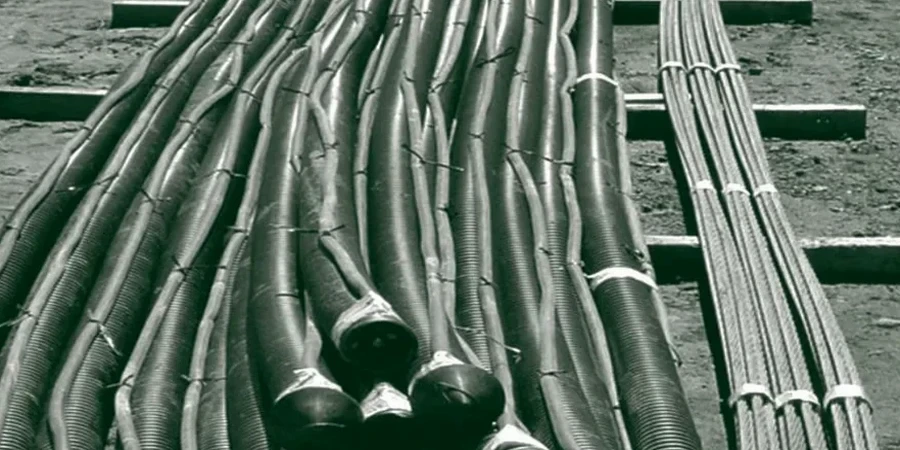
Working on a project near the Isthmus versus a site out by Junction Road means dealing with two very different soil profiles, yet both demand precise lateral support. Downtown Madison sits on glacial lake deposits with layers of soft clay and silt, while the western edges transition into coarser glacial till. An active anchor system relies on a pre-stressed tendon to lock the structure in place, preventing any movement before excavation begins. A passive anchor, by contrast, only engages once the soil mass starts to deform, making it a viable solution where minimal displacement is acceptable. Understanding which mechanism suits your cut is the first step toward a safe, efficient excavation plan, and our lab verifies bond strength in the actual ground conditions you will encounter on site—not just textbook assumptions.
An anchor's bond zone must sit beyond the failure wedge, or you are simply anchoring to the very soil mass that is trying to slide.