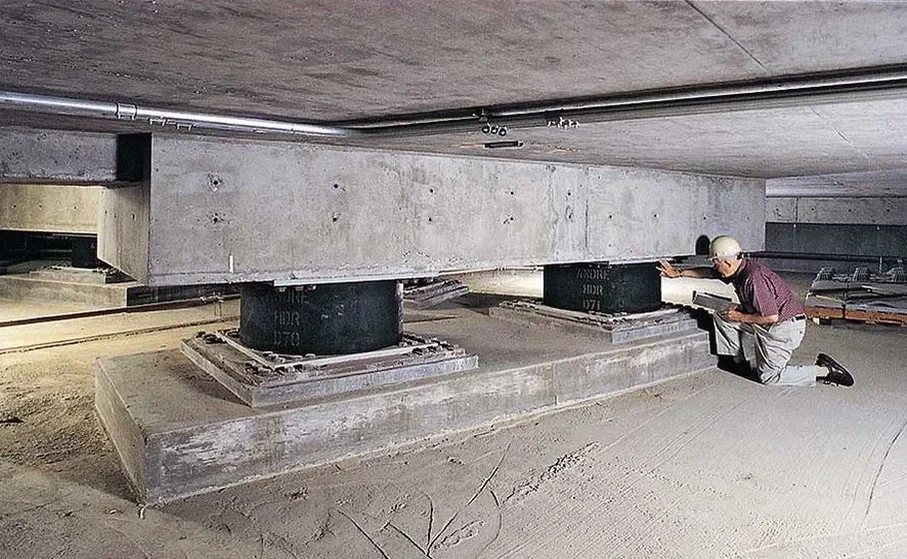
Madison sits on a geological patchwork that ranges from solid sandstone on the west side to compressible glacial lake clays near the Isthmus. Putting up a building near Lake Monona is nothing like anchoring into the dolomite bluffs out toward Middleton. The soil profile changes how seismic waves travel upward, and that directly shapes the performance of any isolation system. In our background, a downtown hospital on 90 feet of silty clay needs a very different approach than a university lab on shallow bedrock near the Capitol. We look at the seismic microzonation data for Dane County before we even start sketching the isolator layout, because local amplification matters as much as the fault distance. The goal is straightforward: let the ground move while the building stays steady.
A properly tuned base isolation system on Madison's deep glacial deposits can reduce floor accelerations by 50% or more, keeping hospitals operational after the design-level earthquake.