GEOTECHNICAL ENGINEERING
MADISON
HomeGround improvementVibrocompaction design

Vibrocompaction Design in Madison WI: Ground Improvement for Glacial Soils

Knowledgeable. Thorough. Resourceful.

LEARN MORE

The 2018 International Building Code (IBC), adopted by the City of Madison, requires that sites with loose natural sands or non-engineered fill be evaluated and improved before structural loads are applied. Much of the city sits on outwash sands and silty sands deposited by the Wisconsin glaciation—materials that can lose density over time or when saturated. Our vibrocompaction design service addresses this directly: we develop depth-specific improvement programs that bring the ground to a target relative density of at least 70 percent, verified through CPT testing both before and after treatment. For projects near Lake Mendota or along the Yahara River, where the water table sits within 2 meters of grade, the technique also reduces the risk of hydrocompaction settlement. We do not rent equipment—we provide the engineering design, spacing grids, and QA/QC protocols that allow Madison contractors to execute the work with confidence.

Vibrocompaction in Madison’s glacial outwash can reliably achieve 75 percent relative density when the probe grid is designed from site-specific CPT data, not a generic spacing chart.
Our service areas

Our approach and scope

A mistake we see repeatedly on Madison infill lots is assuming that a few passes with a smooth-drum roller will densify 15 feet of loose sand. It will not. The compaction energy from surface rollers attenuates within the first meter, leaving deep zones untreated. Our vibrocompaction designs use depth vibrators that reach 10 to 35 feet, with probe spacing calculated from grain-size distribution data. When the fines content exceeds 12 percent, we often recommend a pre-treatment grain-size analysis to confirm that the material will respond to vibratory methods; if not, we shift the design toward stone columns or other alternatives. Our laboratory, accredited under ISO/IEC 17025 through A2LA, runs the full suite of soil classification tests needed to validate the design assumptions. We also specify the power consumption or amperage records during installation as a real-time quality indicator, giving the owner a defensible record of ground improvement performance.
Vibrocompaction Design in Madison WI: Ground Improvement for Glacial Soils
Technical reference — Madison

Local geotechnical context

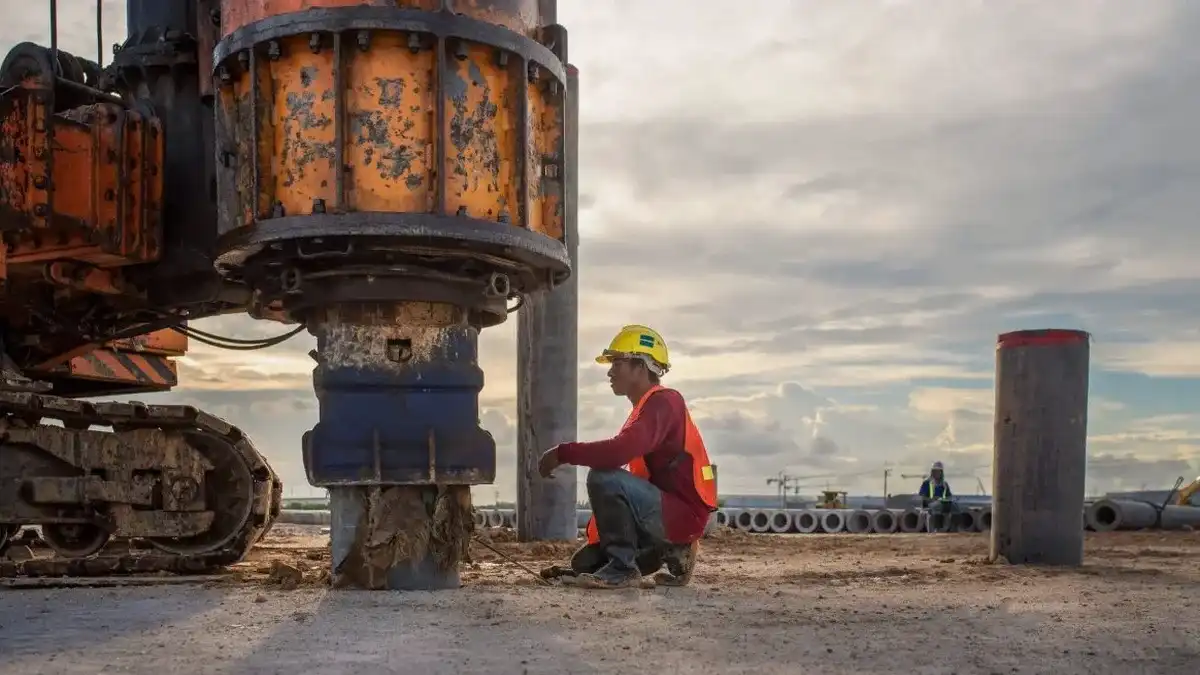
The design equipment for vibrocompaction in Madison typically includes an electric-powered depth vibrator suspended from a crawler crane with a minimum 80-foot boom, paired with a generator set rated at 400 to 600 kVA. The vibrator’s eccentric weight spins inside a steel casing, generating horizontal centrifugal forces that rearrange sand grains into a denser packing. When this equipment is deployed without a site-specific design—using a one-size-fits-all grid—the most common failure mode is a treated crust over untreated sand. The IBC requires post-treatment verification, and if the CPT or SPT data show zones below 60 percent relative density within the influence depth of footings, the design must be revised and the area re-treated. In Madison’s isthmus neighborhoods, where lot widths can be as narrow as 40 feet, probe access and vibration monitoring at adjacent historic structures add a layer of complexity that a desk study alone cannot resolve. We address this with sequential treatment sequences and peak particle velocity limits written into the specification.

Need a geotechnical assessment?

Reply within 24h.

Email: contact@geotechnicalengineering1.org

Reference standards

IBC 2018 (adopted by Madison, Chapter 18 on Soils and Foundations), ASCE 7-22 (Minimum Design Loads – Chapter 12 seismic provisions, applicable to improved ground), ASTM D1586 (Standard Test Method for SPT and Split-Barrel Sampling – verification borings), ASTM D2487 (Standard Practice for Classification of Soils for Engineering Purposes)

Reference parameters

ParameterTypical value
Applicable depth range10 to 35 ft below grade (typical for Madison glacial deposits)
Target relative densityMinimum 70% (per project specs, often 75–85% for commercial structures)
Probe spacing5 to 10 ft triangular or square grid, based on gradation and depth
Fines content limit for effectiveness< 12–15% passing No. 200 sieve (ASTM D2487)
Vibrator power130 to 300 kW electric or hydraulic, selected by depth and soil resistance
Pre/post verification methodCPT tip resistance (qc), SPT N-values, or shear wave velocity profiles
Water table considerationHigh groundwater near lakes requires adjusted backfill and flushing protocols

Frequently asked questions

What does vibrocompaction design cost for a Madison commercial lot under one acre?

For a typical commercial parcel in Madison under one acre, the vibrocompaction design package—including site characterization, grid design, and post-treatment verification—runs between US$1,450 and US$5,810. The range depends on treatment depth, number of verification borings, and whether groundwater corrections are needed near the Yahara chain.

Does vibrocompaction work in the silty sands found on Madison’s east side?

It depends on the silt content. We test the material against ASTM D2487; if the fines content stays below about 12 percent, vibrocompaction performs well. Above that threshold, the silt dampens the vibratory energy, and we typically recommend a feasibility trial or evaluate stone columns as a more reliable alternative for those soil conditions.

How long does the design process take before the contractor can mobilize?

We can complete the geotechnical investigation and deliver a preliminary vibrocompaction grid design within 10 to 14 working days after drilling finishes. The final design with acceptance criteria follows within a week of receiving lab results, which keeps the project on track for Madison’s tight summer construction window.

What verification do Madison building officials require after vibrocompaction?

Under IBC Chapter 18, Madison reviewers expect a post-treatment investigation report showing that the improved ground meets the required relative density. We typically perform CPT soundings or SPT borings at a rate of one test per 2,500 square feet of treated area, and we correlate the results to the design acceptance criteria before issuing the final compliance report.

Location and service area

We serve projects in Madison and surrounding areas.

View larger map