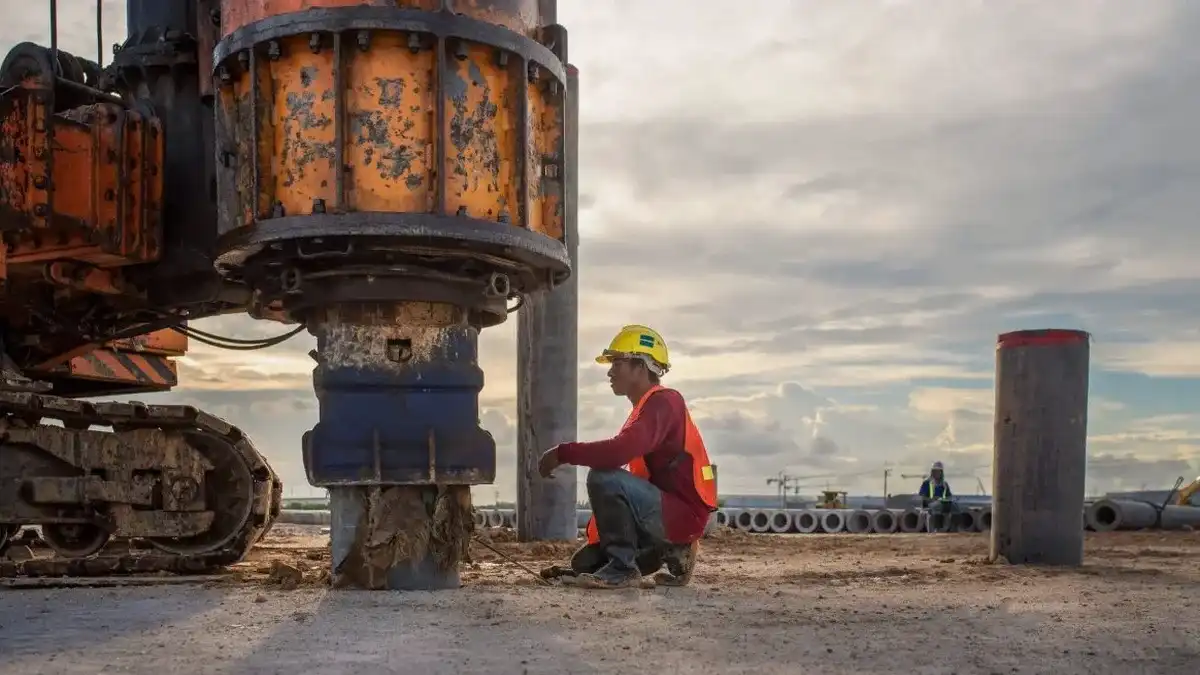
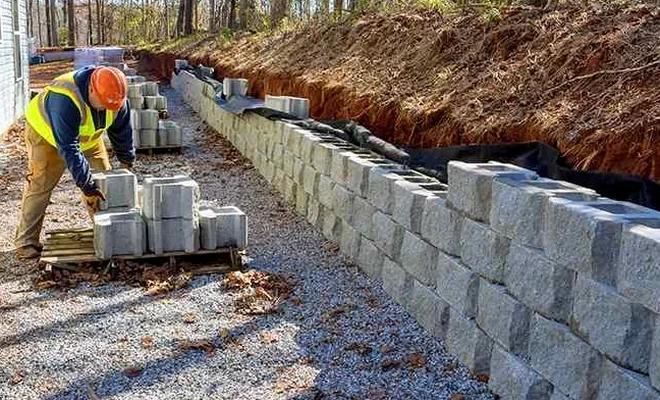
In Madison, we rarely see a straightforward retaining wall project. The glacial geology left behind a puzzle of high-plasticity clays, silt lenses, and buried organics that shift drainage patterns in ways standard designs miss. A wall on the west side near Lake Wingra behaves nothing like one cut into the moraine east of I-39. We tie every design to subsurface data: SPT refusal depths, Atterberg limits on the retained soil, and pore pressure assumptions verified in the field. Without that, you are guessing at lateral earth pressure coefficients. For walls exceeding 4 ft, Madison's IBC-adopted code triggers engineering submittal requirements. We combine the SPT drilling data with laboratory classification to select phi and cohesion values that hold up under saturated conditions.
A retaining wall in Madison's glacial soils is a drainage structure first and a structural element second.