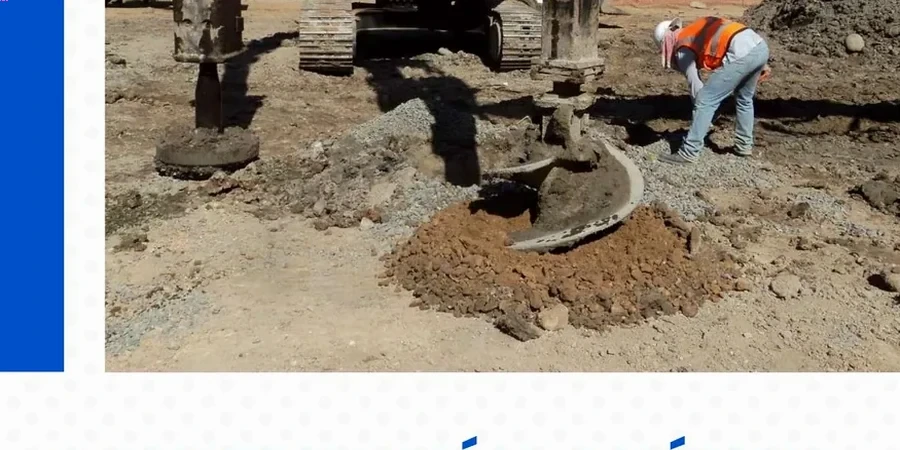
The International Building Code (IBC) and ASCE 7 are the governing frameworks for ground improvement in Wisconsin, and nowhere are they more critical than on the compressible glacial lakebed deposits underlying Madison. Our design approach addresses the city’s specific geotechnical challenge: stabilizing low-plasticity silts and soft clays deposited in the Yahara River watershed, where undrained shear strengths often fall below 500 psf. We develop vibro-replacement stone column arrays that densify the matrix, accelerate consolidation settlement, and supply a drained load path. For sites near the Isthmus or along East Washington Avenue, where fill thickness can exceed 15 feet, integrating stone column design with a CPT test program provides continuous stratigraphic resolution before construction begins. The goal is not just meeting a minimum factor of safety—it is delivering a settlement-tolerant foundation that performs through Madison’s freeze-thaw cycles without differential movement.
A well-designed stone column grid can reduce post-construction settlement by 60% compared to untreated soil—critical on Madison’s compressible lakebed clays.