GEOTECHNICAL ENGINEERING
MADISON
HomeFoundationsShallow foundation design

Shallow Foundation Design for Madison’s Glacial Terrain

Knowledgeable. Thorough. Resourceful.

LEARN MORE

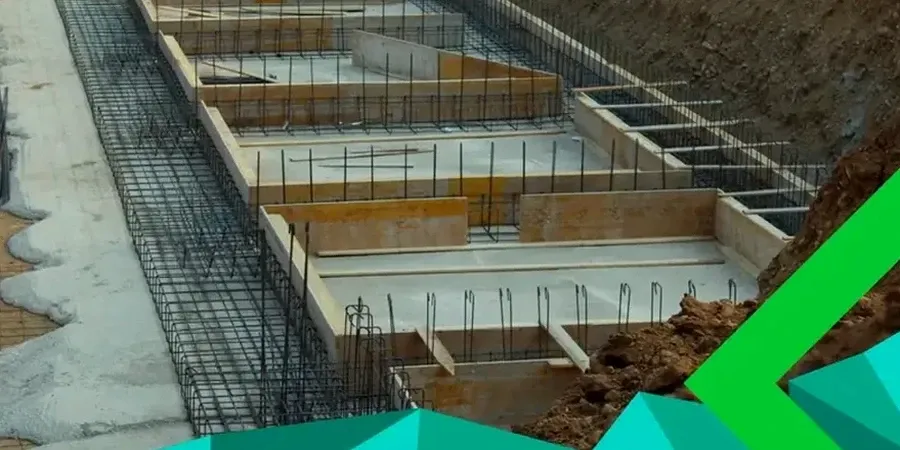
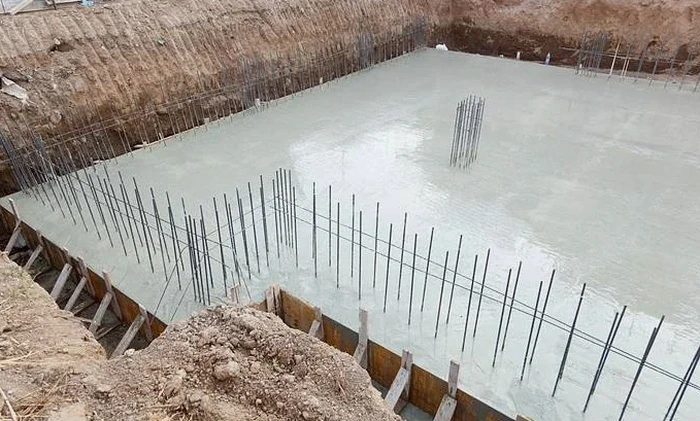
In Madison, the legacy of the Wisconsin Glaciation is written into every building site—from the dense, stony till of the moraines to the compressible silt lenses left by ancient Lake Yahara. A shallow foundation design that works in downtown Milwaukee will often fail a structural review here, simply because the bearing stratum 4 feet down is not what the driller expected. Our team correlates SPT drilling data with laboratory classification under ASTM D2487 to isolate those critical soft pockets, then sizes footings so that total settlement stays within the 1-inch limit that Madison building officials enforce. We do not just run equations; we ground-truth every parameter before a yard of concrete goes into the ground.

In Madison’s glacial stratigraphy, the difference between 2,500 psf and 3,500 psf bearing is often 18 inches of excavation and a visual classification of the till matrix.
Our service areas

Our approach and scope

The most expensive mistake we see in Dane County is a geotechnical report that recommends 3,000 psf net allowable bearing pressure across the entire lot, ignoring the lateral variability that glacial deposition creates. One corner of the building ends up on dense till, the other on saturated outwash sand, and within three freeze-thaw cycles the differential movement cracks the slab and jams the doors. A proper shallow foundation design reconciles this patchwork geology by mapping cone penetration data from a CPT test against continuous soil profiles, then defining separate bearing zones if the transition is sharp. We also factor in Madison’s 48-inch frost depth requirement—a detail that IBC Table 1809.5 flags but that many designers overlook when setting the bottom-of-footing elevation near unheated garages or walk-out basements. The result is a foundation plan that the city reviewer can approve on the first submittal, without back-and-forth over presumptive values.
Shallow Foundation Design for Madison’s Glacial Terrain
Technical reference — Madison

Local geotechnical context

Before we cast a single footing dimension, the field crew sets up the Dutch cone penetrometer on the actual building footprint—not 30 feet away where the drill rig could fit. This is a non-negotiable step in Madison, where a 2-foot layer of organic marsh muck can pinch out over a 15-foot horizontal distance and escape detection by widely spaced borings. The penetrometer tip registers the sudden drop in resistance the moment it enters that compressible lens, and the data logger records the depth to within half an inch. If the weak layer lies within the zone of stress influence—typically twice the footing width—we adjust the shallow foundation design by deepening the excavation or by specifying a compacted crushed-stone replacement that the soils engineer can verify with a nuclear density gauge before the rebar is tied.

Need a geotechnical assessment?

Reply within 24h.

Email: contact@geotechnicalengineering1.org

Reference standards

ASCE 7-22 (Minimum Design Loads and Associated Criteria for Buildings and Other Structures), IBC 2024 (International Building Code, Chapter 18 – Soils and Foundations), ASTM D1586 (Standard Test Method for Standard Penetration Test), ASTM D2487 (Standard Practice for Classification of Soils for Engineering Purposes), ASTM D5778 (Standard Test Method for Electronic Friction Cone and Piezocone Penetration Testing)

Reference parameters

ParameterTypical value
Typical footing width (residential, 2-story)16 to 24 inches
Net allowable bearing pressure (dense till)3,500 to 5,000 psf
Net allowable bearing pressure (lacustrine silt, drained)1,500 to 2,000 psf
Minimum frost-protection depth per IBC48 inches below finish grade
Maximum total settlement (structural tolerance)1 inch
Factor of safety against bearing failure (ASCE 7)≥ 3.0
Reinforcing steel grade (typical for strip footings)Grade 60 (ASTM A615)

Frequently asked questions

How much does a shallow foundation design cost for a single-family home in Madison?

For a typical single-family residence in the Madison area, the geotechnical investigation and foundation design report ranges from US$2,150 to US$2,910, depending on the number of borings required and the complexity of the soil profile. This includes the field exploration, laboratory testing, bearing capacity calculations, and the stamped design submittal for the city building permit.

What is the frost depth for footings in Madison, Wisconsin?

The code-mandated frost protection depth in Madison is 48 inches below finished grade, per IBC Section 1809.5. Some local jurisdictions in Dane County may accept 42 inches if insulation is provided, but the city standard is 48 inches, and our designs default to that value for all exterior footings.

Can you design shallow foundations on the organic soils found near the Yahara River?

In many cases, yes, but we typically recommend over-excavating the organic layer and replacing it with compacted granular fill. If the organic stratum is too thick, a shallow foundation may not be feasible, and we will advise on deep foundation alternatives. We base that call on cone penetration data and organic content lab results, not on a rule of thumb.

What is the difference between a geotechnical report and a foundation design?

A geotechnical report provides soil parameters—bearing capacity, settlement potential, and lateral earth pressures—while a foundation design translates those parameters into actual footing dimensions, reinforcement schedules, and construction details. Our shallow foundation design package includes both, so the structural engineer and the contractor receive a complete, buildable set of recommendations.

Location and service area

We serve projects in Madison and surrounding areas.

View larger map