GEOTECHNICAL ENGINEERING
MADISON
HomeFoundationsRaft/mat foundation design

Raft Foundation Engineering for Madison's Glacial Soils

Knowledgeable. Thorough. Resourceful.

LEARN MORE

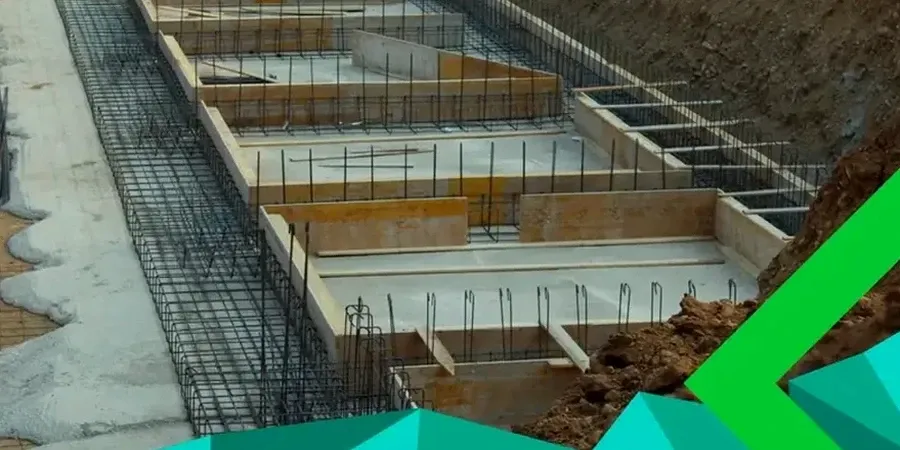
Madison sits on a complex glacial legacy. The Yahara River valley, with its chain of lakes, left behind up to 100 feet of soft lacustrine clay and silt over denser glacial till. Beneath the isthmus and spreading into Dane County, you will find highly compressible organic layers that make isolated footings a gamble. When you are building on this mosaic of lake-bed deposits, a raft/mat foundation design becomes the logical solution. It floats the structure over the weak zones, bridging inconsistencies that would crack a conventional foundation within the first freeze-thaw cycle. The stiff concrete mat acts as one unit, resisting differential settlement where the underlying peat lenses thin and thicken unpredictably across the footprint of a single lot.

A properly engineered mat in Madison's isthmus soil distributes load so evenly that bearing pressure on the soft clay stays below the preconsolidation stress of the original glacial deposit.
Our service areas

Our approach and scope

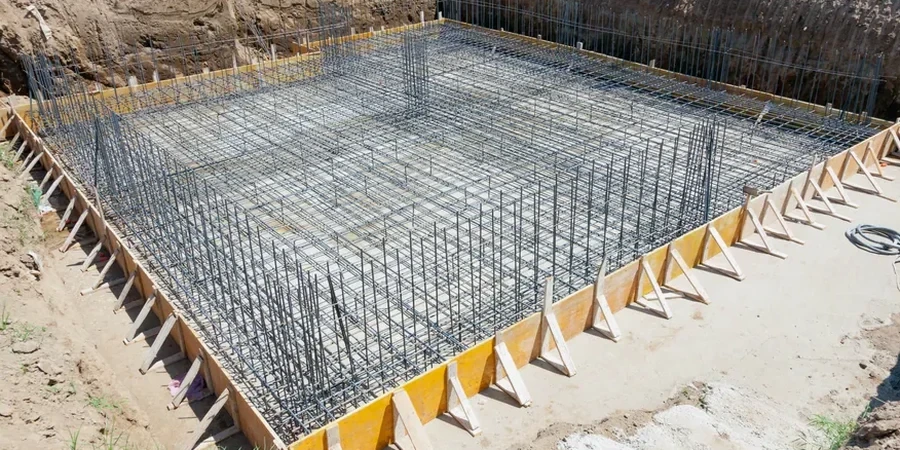
The seasonal extremes in southern Wisconsin drive our approach to raft/mat foundation design. With a frost penetration depth reaching 48 inches and spring thaws saturating the upper silts, the soil beneath a mat must handle repeated heave without transferring stress to the superstructure. We integrate subsurface data from CPT testing to map the thickness of the compressible organic layer across the site. This continuous profile lets us calculate the exact modulus of subgrade reaction needed for the mat's stiffness. A reinforced mat, typically 12 to 24 inches thick with top and bottom steel, distributes column loads of a mid-rise building so effectively that bearing pressures stay under 2,000 psf even when the underlying material is a soft, high-plasticity clay. The design locks the building together, preventing the angular distortion that leads to drywall cracks and stuck doors in Madison's older lakefront homes.
Raft Foundation Engineering for Madison's Glacial Soils
Technical reference — Madison

Local geotechnical context

Madison's population of over 270,000 sits atop a geological setting where differential settlement is the primary geotechnical hazard. The 2018 flooding along Lake Monona showed how quickly the water table rises to within two feet of the surface, saturating the compressible silts and clays. A raft/mat foundation design directly confronts this risk. Without the deep, rigid mat tying the structure together, a corner of a building over a buried peat pocket can settle three times more than the opposite corner founded on glacial till. That angular distortion tears apart masonry and misaligns elevator rails. The mat functions as a stiff raft, and when we design it, we analyze the soil-structure interaction to ensure the center-to-edge settlement differential stays within the IBC's limit of 1/360 for the span. In Madison, this is not an option for heavy structures on the lake plain; it is the only way to guarantee long-term performance.

Need a geotechnical assessment?

Reply within 24h.

Email: contact@geotechnicalengineering1.org

Explanatory video

Reference standards

IBC 2021 Section 1808 (Mat Foundations), ASCE 7-22 Chapter 12 (Seismic Design), ACI 318-19 (Structural Concrete), ASTM D2487 (Unified Soil Classification), ASTM D1586 (Standard Penetration Test)

Reference parameters

ParameterTypical value
Typical Mat Thickness12 to 36 inches
Allowable Bearing Pressure (Soft Clay)1,500 to 2,500 psf
Frost Protection Depth (Dane County)48 inches minimum
Modulus of Subgrade Reaction (k)50 to 150 pci (soft soils)
Reinforcement Yield StrengthGrade 60 (ASTM A615)
Typical Concrete Strength4,000 to 5,000 psi
Maximum Predicted Settlement< 1 inch total

Frequently asked questions

How much does a raft/mat foundation design cost for a project in Madison?

For a typical commercial or mid-rise residential project in Madison, the geotechnical investigation and engineering design for a raft/mat foundation generally ranges from US$960 to US$4,600. The final fee depends on the building footprint, the depth of the soft lake-bed deposits, and the number of borings or CPT soundings required to characterize the site variability.

Why is a mat foundation better than deep piles for Madison's lake-bed clay?

In Madison's Yahara River valley, the compressible organic silts can extend 50 feet deep before hitting competent till. End-bearing piles require driving through that soft zone to reach the dense till, which is expensive. A raft/mat foundation design uses the near-surface soil as a distributed support system. It avoids the cost of deep pile rigs and handles the variable thickness of the soft layer by floating over it as a rigid unit.

What is the minimum thickness for a mat foundation in Dane County?

We typically design mats no thinner than 12 inches for residential loads and 18 to 36 inches for commercial structures. The thickness is driven by the required rigidity to span weak pockets in the glacial drift. A thinner mat cannot provide the necessary beam action and risks excessive differential settlement when the underlying peat lenses compress unevenly under the building's dead load.

How does the high water table on the isthmus affect a mat foundation?

The water table in central Madison often rises to within 2 to 4 feet of the surface. For a raft/mat foundation design, we account for buoyancy and hydrostatic uplift forces. The mat's dead load must exceed the uplift pressure, or we must install a sub-slab drainage layer and sump system to relieve pore pressure. We also specify waterproofing admixtures in the concrete and consider sulfate attack if the groundwater chemistry warrants it.

Can a raft foundation handle the seismic loads in Wisconsin?

Madison is in a region of low to moderate seismicity, but the deep soft clay deposits can amplify ground motion. We design the raft/mat foundation using the spectral response accelerations from ASCE 7 and the IBC. The mat's large footprint and mass provide excellent base shear transfer. Its rigidity prevents the differential horizontal movement that would rack a conventionally framed foundation on isolated footings during a long-period event.

Location and service area

We serve projects in Madison and surrounding areas. More info.

View larger map